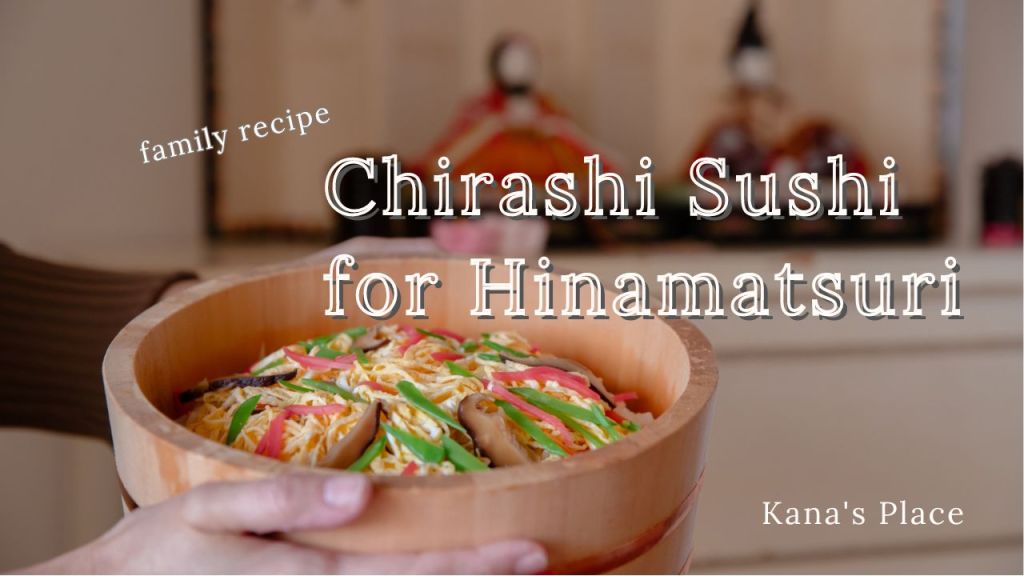
Today, I’m going to share with you how to make a traditional Japanese dish called chirashi sushi, or chirashi zushi as we call it, which is commonly enjoyed at home, especially on Hinamatsuri, or the Doll Festival on March 3rd.
Chirashizushi is the kind of dish that’s often passed down through generations, recipes handed down from mothers, grandmothers, and other family members.
Over the years, I’ve attempted to recreate my mother’s chirashizushi recipe, but unfortunately, my efforts have often fallen short. Each time, there was something missing, a flavor or texture that just didn’t quite match up to the dish I remembered from my childhood.
So this year, I reached out to my mother for her original recipe, determined to follow it to the letter.
So join me as I take on this challenge and strive to make my mother proud by preparing her cherished chirashi zushi recipe, exactly as she intended. It’s my way of carrying on the tradition and passing it down the generation. You’ll also learn a bit about Doll’s Day and Japanese cuisine.
Cultural and family heritage give us connection to our rich history, and also provide us with hopes and guidance for our future.
Remember, it’s not about making everything perfect, but about appreciating the simple joys of life.
So, let’s get started!
Hinamatsuri holds a dear place in my heart. It’s a time to honor tradition, family heritage, and the changing seasons.
The Hina dolls displayed every March are not just home decor: they are symbols of well-wishes for the girls in the house, passed down from generation to generation.
These dolls, now 51 years old, were originally purchased for me when I was born. When I got married, my mother gave them to me, and they’ve been a part of my life ever since, symbolizing wishes for the happiness of my daughter.
Hinamatsuri is traditionally considered a day to wish for the happiness of young girls in the family. As such, When daughters grow up and leave the household, some families may stop celebrating the occasion. Despite this, my mother continues to prepare a special dish for Hinamatsuri, even though it’s just her and my father at home now. I’m inspired by her dedication to preserving our traditions, and I’m committed to continuing this practice in my own home.
It is also a great way to celebrate the changing of the season, symbolizing the arrival of spring. Whether or not there are girls in the household, it’s a wonderful opportunity to embrace the spirit of the season.
Chirashi sushi or chirashizushi as we call it, translates as “scattered sushi” in English. It’s made with sushi rice topped with a variety of ingredients such as vegetables, seafood, and eggs. Unlike other types of sushi where the ingredients are neatly rolled or pressed, chirashizushi allows for a more relaxed presentation.
The fillings and toppings can vary depending on personal preference and mostly, regional variations, which is what I find to be very interesting. I’ll talk about that later in the video.
Let’s get cooking.
I’m no expert in cooking, but I can tell you this: You don’t need a rice cooker to make perfect rice. You can easily cook it in a pot on the stove.
Here’s how. I’ve already rinsed and drained the rice thoroughly. It’s important to let it sit on the counter for a bit to absorb excess water. Measure the amount of rice after it’s had time to absorb water. Then add the same amount of water as rice, along with a piece of konbu, or seaweed, for sushi rice which adds extra depth of flavor.
Bring it to a boil over high heat, then reduce the heat to low and let it simmer for about 12 minutes. After that, turn off the heat and let it sit for another 8-10 minutes. Done!
While the rice cooking, let’s prepare the sushi vinegar. My mother taught me to make the sushi vinegar well in advance so that all the flavors have time to meld together. Vinegar mellows out, becoming less pungent.
It’s rice vinegar, sugar, and salt. Every household has its own sushi vinegar recipe. In our household, we prefer a slightly sweeter sushi vinegar.
By the way I learned this year that this recipe came from my grandmother who was given the recipe from her friend. And it’s mine now, so this is the third generation.
Let’s prepare the fillings and toppings.
Today I’m using carrots, burdock, dried shiitake mushrooms, dried gourd strips, dried tofu called koyadofu, and snow peas and eggs. Each ingredient adds its own unique flavor and texture to the dish.
For the dried ingredients I’m using today, I’ll soak them in water to soften them. Shiitake mushrooms require about 3 hours in cold water. Once softened, cut them into thin strips.
The gourd strips take about 10 minutes in hot water. Then they need to be boiled till tender, then cooked in broth.
Dried tofu is an exception; you don’t need to soften them. Just cook them directly in hot dashi.
Next, cut up the fresh vegetables into thin strips. In Japanese cooking, I’ve found that preparation is crucial. It feels like preparation takes precedence over cooking. When making chirashizushi, every ingredient is cut into small pieces. This ensures that each bite provides a perfect blend of flavors and textures. I think my mother cuts them into even smaller pieces, by hand of course, but I’m not as meticulous as she is; she might watch this video and point out that I didn’t cut them small enough!
Burdock is a firm vegetable, so we cut it into a special type of julienne called “sasagaki”. To eliminate bitterness, soak them in water. Despite being a fresh root vegetable, burdock adds an umami flavor similar to dried vegetables.
Its earthy aroma adds extra layer of flavor to sushi rice.
Interestingly, burdock is considered a fortuitous food, symbolizing many things including health and well living.
Snow peas are for garnish, so simply cook them in boiling water for a few minutes and drain.
For gourd, boil, drain, and cook them in dashi.
There are different ways to cook these fillings. Some people cook them all at once, but my mother’s advise was to cook them separately.
Since each vegetable requires a slightly different flavor, I decided to cook them in order from lightest to darkest. So I made a basic broth which is made of dashi, sugar and soy sauce.
Cook the carrots first, then remove them from the broth, Add sugar and soy sauce to the remaining dashi and cook the burdock. Repeat this process, adding a little more sugar and soy sauce for each subsequent vegetable. The shiitake mushrooms should be cooked last as we want them to absorb the most flavor. Cook until there’s very little dashi left.
My mother’s advice is not to overpower the flavor of the ingredients mixed into the sushi rice. If it’s too strong, the sushi rice will be overwhelmed.
Next up, eggs! We’re going to cook them like crepes and then cut them into strips. This adds a pop of color and delicious savory element as eggs are not sweetened.
thinly shredded omelette strips are called Kinshi Tamago, often used as a garnish in Japanese cuisine. It’s made by cooking beaten eggs in a thin layer, then rolling and slicing them into fine threads resembling silk threads, hence the name “Kinshi” which means “golden threads.” Isn’t that beautiful? These delicate egg threads are commonly used to decorate dishes like sushi, chirashi zushi, and noodle dishes, adding both visual appeal and a subtle eggy flavor to the dish.
Let’s add sushi vinegar to rice. I’m using a traditional wooden sushi oke bowl. Not only does this add an authentic feel to the dish, but it’s also highly practical. The wooden material helps absorb any excess moisture from the rice, resulting in sushi rice that’s perfectly balanced in texture and consistency.
When mixing the vinegar into the rice, it’s important to maintain the texture of the grains, making sure that it doesn’t become mushy.
To achieve this, use a gentle vertical motion with the rice scoop as you fold the vinegar mixture into the rice. Additionally, it’s recommended to cool the rice as you mix, using a fan (Uchiwa) to quickly absorb the vinegar and to make sushi rice nice and shiny.
So, quite often, chirashi zushi making is a family affair or a team effort. When I was a child I was on a fanning duty while my mother mixed.
Next, spread the cooked fillings and gently fold them into the sushi rice, ensuring that they are evenly distributed. Yeah, I think these fillings are a tad too big for my mother’s liking.
Let’s assemble our chirashi zushi!
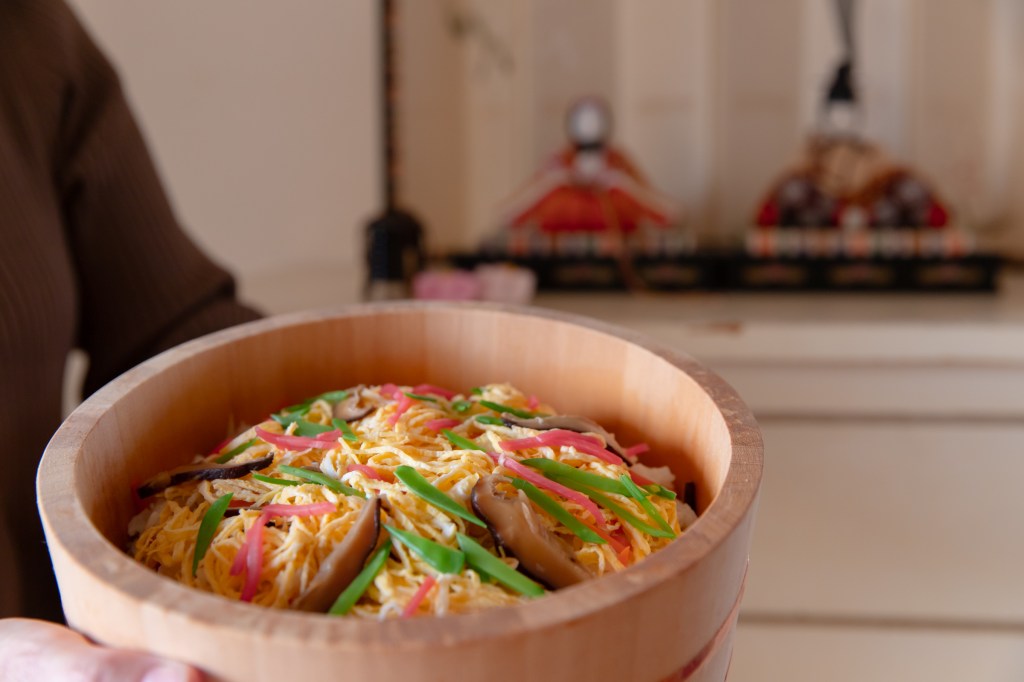
Spread the rice evenly across the bottom of the bowl. Top with Kinshi Tamago, or strips of eggs. Chirashi zushi is typically finished with colorful toppings, with colors playing an important role in deciding what to top it with. So here, eggs for yellow, I decided to place some shiitake for brown, sliced snow peas for green, and the red ones you see here are pickled ginger.
And there you have it, my take on the family recipe for chirashi zushi, ready to be enjoyed with family and friends on the special day of Hinamatsuri.
What I’ve shared with you today is perhaps one of the most humble and simple versions. My mother usually adds some kind of cooked fish to this, like shrimp, eels, and pickled fish.
I mentioned that the fillings and toppings have regional variations. People use whatever produce is abundantly available in their particular region. In the mountainous region of Shikoku, where my parents are from, the fillings primarily consist of dried vegetables and other seasonal produce from the land. And for special occasions, they may include cooked or preserved fish.
On the other hand, in many coastal areas where fishing is the main industry, they use raw fish for chirashizushi.
On the actual day of Hinamatsuri, I’ll be serving chirashi zushi alongside other side dishes of seasonal vegetables, a soup made with broth and cherrystone clam, homemade amazake (a non-alcoholic sweet sake made from fermented rice), and ending with a simple dessert. I’ll capture all of it and post it on my Instagram.
Thank you for joining me on this challenge to replicate a family recipe. It reminded me once again how important it is to honor the traditions that connect us to our past and guide us into the future.
 Kana's Place